Wireless. Built for carrier acceptance.
Macro towers, rooftops, small cells, and hard-access sites by crane and helicopter. 600+ AT&T builds and 400+ T-Mobile North Texas sites across HexTel programs, with sweep, PIM and carrier acceptance planned from mobilization, not added at closeout.
01 / Overview
Self-performed. Closed out to acceptance.
From new macro builds to capacity upgrades, rooftop deployments to hard-access sites, the crew that mobilizes is the crew that closes out.
The standard
Mission-critical telecom builds come down to safety discipline, workmanship that holds up at audit, and closeout documentation that does not need to be rebuilt afterwards.
That is the operating standard for each program HexTel runs, from a single tower modification to a multi-state rollout window.
Crews are active in multiple states, including Texas, Virginia, North Carolina, South Carolina, New Mexico, Arizona, California, Colorado, Iowa, Nebraska, Minnesota and Alaska, and mobilize nationwide. Carrier acceptance evidence is captured during the work (photos by station, sweeps, PIM, grounding verification and as-builts), so the handoff does not turn into a punch-list crisis.
Related explainers: What is an MCA tower upgrade? · What is PIM testing? · What is an antenna sweep test? · DAS vs BDA
02 / What we do
Five scopes. One accountable team.
Macro, rooftop, hard-access, antenna and in-building work, by HexTel crews.
Macro builds, modifications and MCA upgrades
New site construction, modifications and capacity-add upgrades on existing macro towers. Foundation, grounding and tower-top work by full-stack crews.
- Tower climbers, rigging discipline and hard-access planning under real schedule pressure
- MCA and capacity-add modifications, with structural reinforcement coordination
- Foundation, grounding and 200A service upgrades when the scope requires them
- Carrier-acceptance documentation captured during the work, not after
Rooftops and small cells
Urban rooftop installs, magnetic-mount water-tank deployments, and small-cell radio and backhaul integration, with landlord and AHJ coordination handled.
- Rooftop site readiness, screening and landlord coordination
- Magnetic-mount water-tank installs for non-penetrating attachments
- Small-cell radio and backhaul integration with carrier acceptance support
- Code, AHJ and access-window coordination planned before mobilization
Crane, helicopter and restricted-access sites
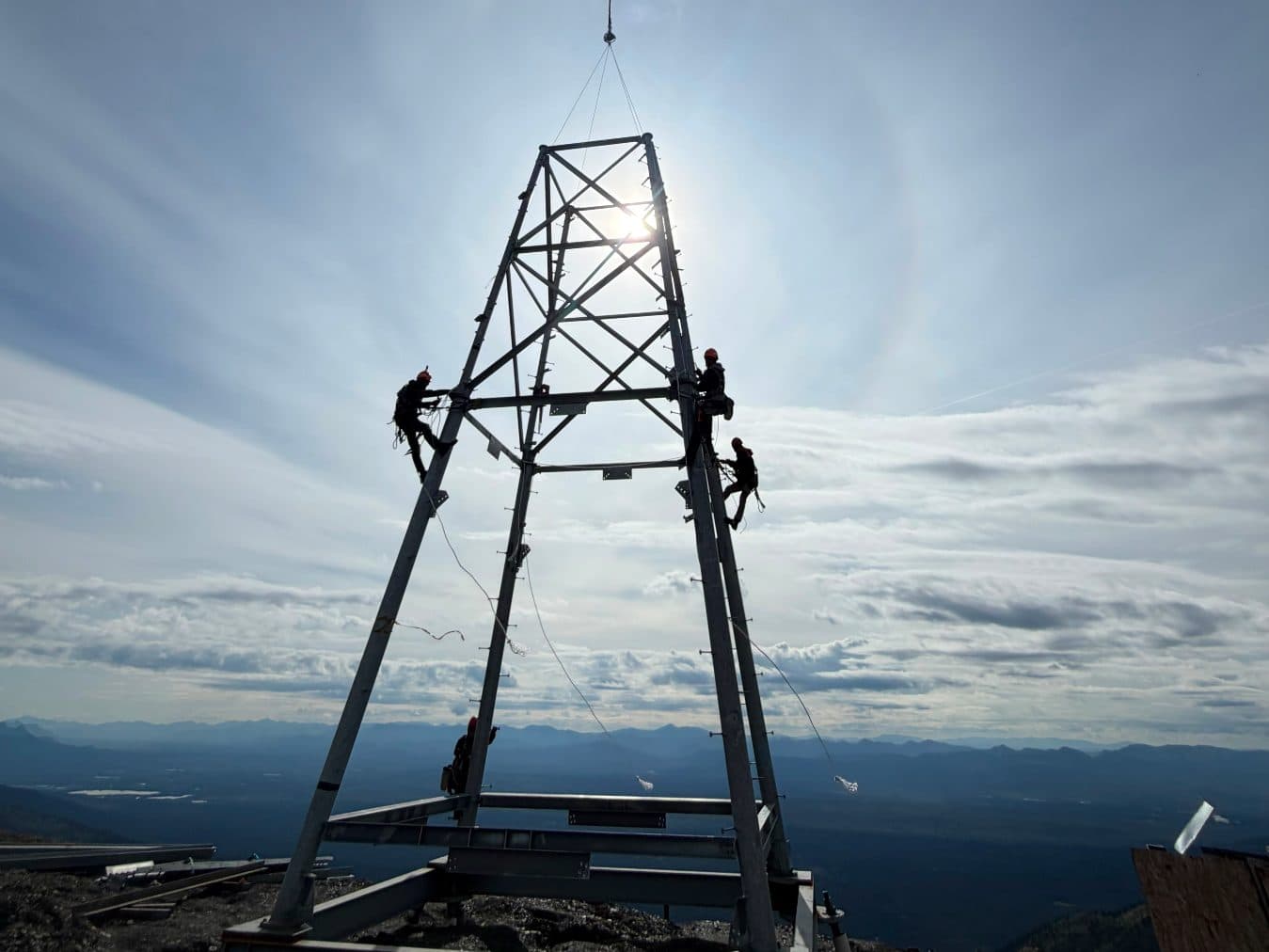
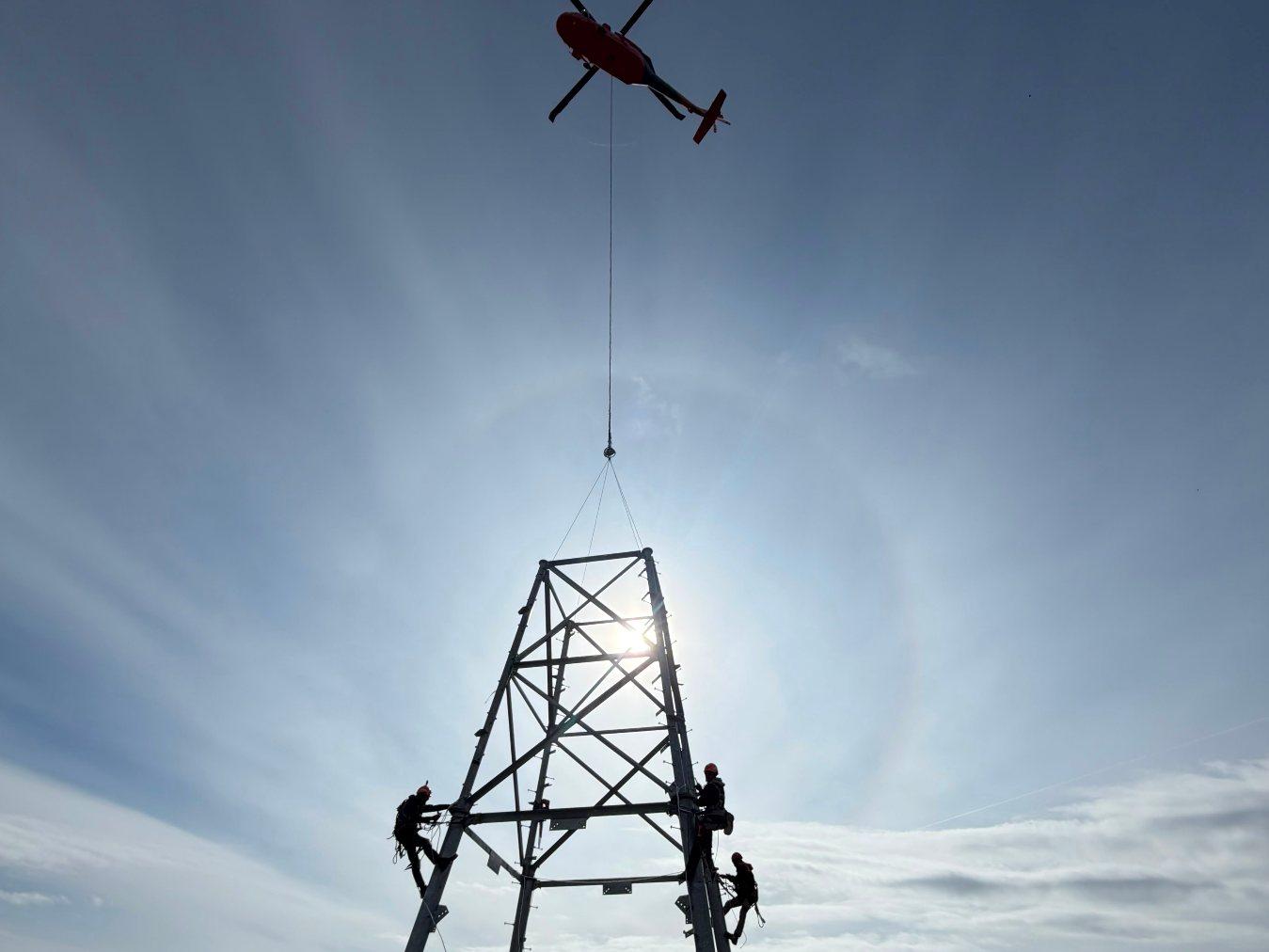
Sites where standard mobilization is not enough: crane operations, helicopter sets, restricted-access locations and water-tank installations.
- Crane operations and lift planning for tower-top and roof installations
- Helicopter set coordination on remote or constrained sites
- Restricted-access protocols for ports, refineries and prisons
- Safety stand-downs, JSAs and rescue readiness planned into mobilization
Antennas, RRUs, lines and testing
Antenna and RRU installations, line and cabling work, grounding to standard, and sweep and PIM testing, with the test data packaged into closeout.
- Antenna and RRU installs with commissioning support coordination
- Line installs, mounts and grounding to carrier and code standards
- Sweep and PIM testing, with the test reports in the closeout packet
- QA evidence packs: photos, sweeps, as-builts and punch tracking
In-building DAS and public-safety BDA
Indoor coverage where it matters: DAS installs across venues and campuses, plus public-safety BDA coordination where code compliance and acceptance are required.
- In-building DAS installs and validation support across complex venues and campuses
- Public-safety BDA coordination where code compliance and acceptance are required
- Testing support: walk-test coordination, punch resolution and evidence packaging
- Owner and Authority Having Jurisdiction (AHJ) closeout coordination when required
03 / Integration (IX)
We build it. We integrate it.
As a self-performing IX general contractor, HexTel carries the site from construction through activation, alarm resolution and carrier acceptance.
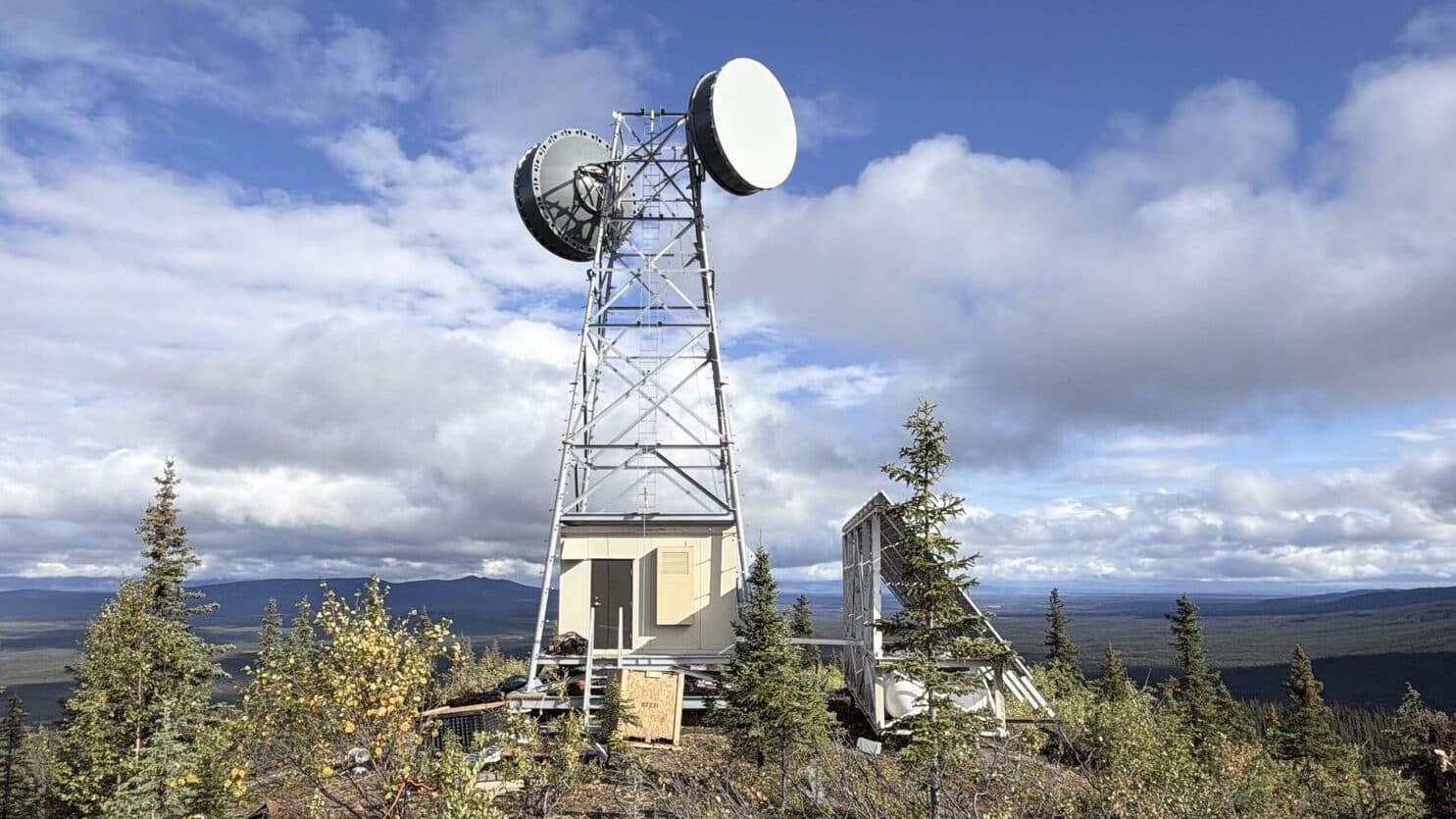
HexTel stays through integration instead of handing off a built site. We support the site from physical construction through radio configuration support, alarm clearing and final carrier acceptance.
One accountable team from groundbreak to on-air.
- Self-performing integration (IX) general contractor on macro, rooftop and small cell sites
- Internal and external alarm troubleshooting, triage and resolution before acceptance windows
- Site commissioning support: power validation, connectivity checks and equipment verification
- RF validation coordination and drive-test support to confirm coverage objectives
- Integration punch-list management and resolution, with documented evidence packs
- Carrier acceptance coordination: closing the loop between field execution and NOC sign-off
04 / Proof
A record across carriers and OEMs.
Macro builds, capacity upgrades, rooftop deployments, small-cell installs and hard-access lifts.
- Company record
- 1,000+ projects completed
- AT&T
- 600+ builds, including 400+ on the AT&T T6 build
- T-Mobile
- 400+ North Texas sites across HexTel programs
- Verizon and Dish
- Wireless work for both carriers
- OEM work
- Alongside Ericsson and Nokia
- Program detail
- Program metrics, market lists and crew detail are released on request
05 / Questions
Common questions on wireless work.
- Which carriers and OEMs do you self-perform for?
- HexTel has delivered wireless work for T-Mobile, AT&T, Verizon and Dish, with OEM work alongside Ericsson and Nokia: 600+ AT&T builds, including 400+ on the AT&T T6 build, and 400+ T-Mobile North Texas sites across HexTel programs. 1,000+ projects completed across the company.
- What is your response window on storm or emergency tower work?
- We dispatch the nearest available crew for emergency tower restoration, with timing confirmed on the first call. Out-of-market emergencies are handled through partner crews under our QA standards.
- How do you decide between crane and helicopter lifts?
- We plan around access, weight, weather window, and cost per lift. For sites where crane reach or staging is constrained, helicopter sets shorten the schedule and reduce ground disturbance. The decision lives in the mobilization plan you see before crews arrive.
- What is in the closeout package?
- Carrier-ready closeout packet: site photos by station, antenna and line sweeps, PIM reports where required, as-builts, labeling photos, grounding verification, and punch resolution evidence, assembled during the work, not reverse-engineered after.
- What safety and RF awareness program do crews work under?
- Fall protection, rescue readiness, RF awareness, and JSAs are built into mobilization. Stand-downs happen when conditions warrant. Our safety record is part of the carrier scorecards we work under.
Next step
Ready to scope wireless work?
Send the scope, the state and the site count. We reply within one business day, ready with the questions that matter to your carrier program.