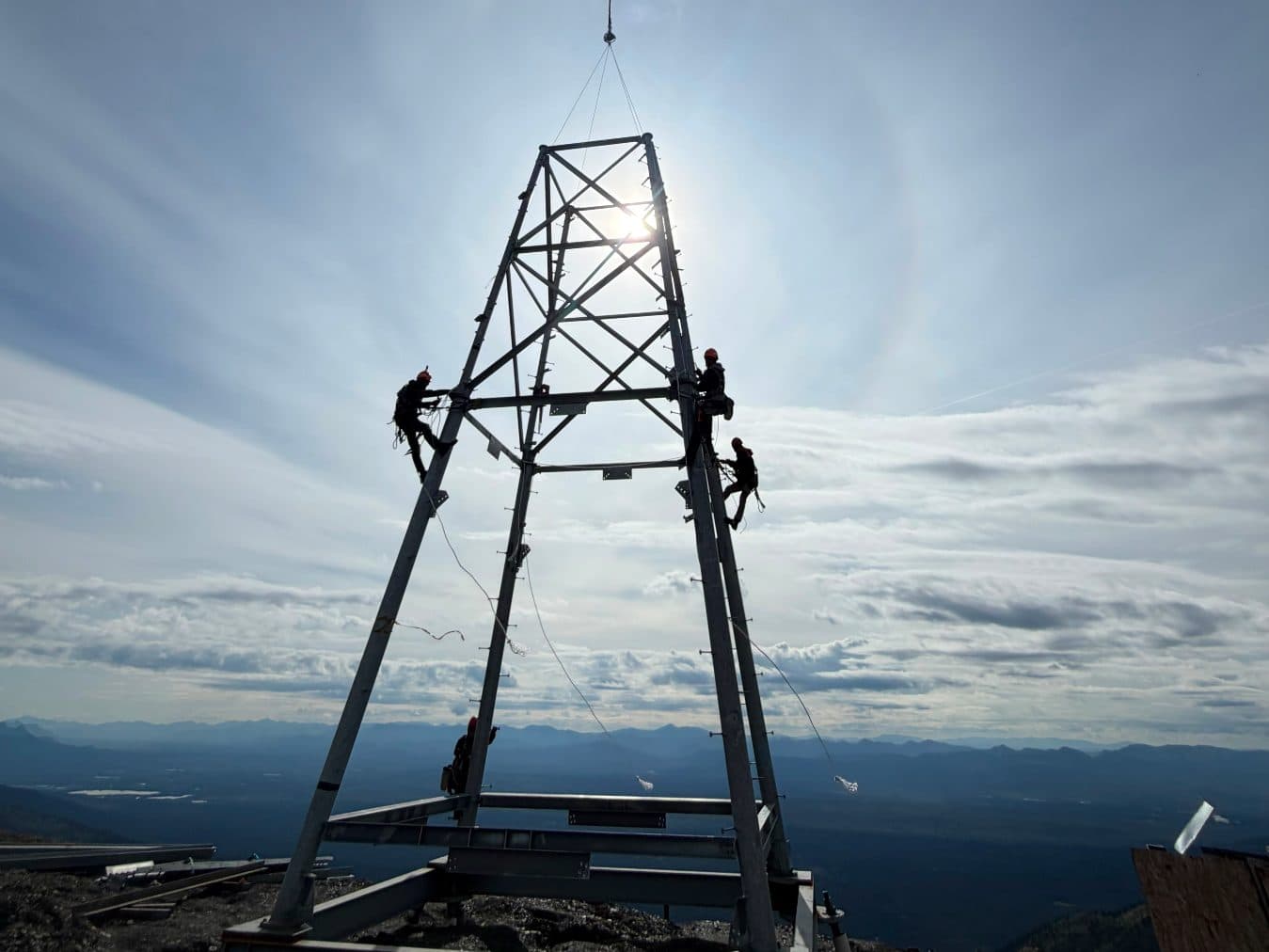
MCA tower upgrade. More capacity, same tower.
An MCA upgrade modifies an existing site to add capacity under the carrier's program requirements: more radios, antennas, spectrum bands or carrier tenants, without rebuilding the tower from scratch.
01 / Definition
The short answer
An MCA upgrade modifies an existing site to add capacity under the carrier's program requirements: new spectrum bands, more radios per sector, an additional tenant, or a heavier antenna load, usually with some combination of structural reinforcement, new mounts, new transmission lines, and updated ground equipment.
Adding capacity to an existing tower is generally cheaper and faster than building a new tower, especially with carriers rolling out new bands (C-band, mid-band 5G, mmWave) on infrastructure that's already in the ground.
02 / Scope
What's typically in an MCA build
- Structural analysis + reinforcement (tower steel members, foundation if required)
- New antenna mounts, brackets, and mounting infrastructure
- Antenna + RRU installation (replacement or addition)
- Hybrid cable runs, jumpers, and grounding
- Transmission line replacement or addition
- Ground-equipment installs (radio cabinets, power, transmission gear)
- Full RF testing: sweep, PIM, alarms, drive-test support
- Carrier-grade closeout: photos, sweeps, PIM, as-builts
03 / How HexTel runs it
Field practice
HexTel runs MCA programs as a self-performing General Contractor: one crew model from site survey through structural mod, install, and carrier acceptance. Climbers, riggers, and integration support all work under the same closeout discipline used on new-build programs.
04 / FAQ
Common questions about MCA tower upgrades
- What does MCA stand for?
- MCA upgrades modify existing sites to add capacity under the carrier's program requirements. It is the industry shorthand for upgrading an existing wireless tower to support additional radios, antennas, spectrum bands, or carrier tenants, without tearing the tower down and building a new one.
- When does a tower need an MCA?
- Most commonly when a carrier needs to add new spectrum (C-band, mmWave, new mid-band) to an existing site, add another tenant, or upgrade the radio count per sector. The tower itself may need structural reinforcement (heavier members, new platforms, new mounts) and the site may need new transmission lines, hybrid cables, and ground equipment.
- What's typically in scope for an MCA build?
- Scope varies by site, but a typical MCA includes: structural analysis and reinforcement (tower steel, foundations if required), new antenna mounts and brackets, antenna and RRU installation, hybrid cable runs and grounding, jumper installation, ground-equipment installs (new radio cabinets, power, transmission), and full sweep / PIM / RF acceptance testing with carrier-grade closeout.
- How long does an MCA take?
- Depends heavily on the carrier program, structural mod scope, and permitting posture. A straightforward MCA with no foundation work can be installed in 1 to 3 weeks of crew time, plus structural lead time and AHJ permits. A complex one with foundation reinforcement or major tower steel work can run 6 to 12 weeks.
- Do MCAs require new permits?
- Most MCAs require at least a building permit for the modifications and FAA review if antenna heights or tower lighting change. AM proximity studies, NEPA, and SHPO reviews may apply depending on site location. Carrier and tower-owner program standards usually drive the documentation requirements.
- Does HexTel self-perform MCA upgrades?
- Yes. HexTel runs MCA crews across our coverage states on carrier work for AT&T, T-Mobile, Verizon and Dish, with OEM coordination alongside Ericsson and Nokia. We self-perform structural mods, antenna and line installs, and carrier-acceptance closeout under one accountable team. See /services/wireless for the full scope.
Next step
Need an MCA executed cleanly?
A 30-minute scoping call covers your structural posture, carrier program, and the shortest safe path to acceptance.