Fiber construction. Bore to closeout.
Directional drilling, jetting, fusion splicing and aerial builds, self-performed by HexTel crews. Test packets and as-builts are captured during the work.
01 / Overview
One contractor. The full OSP stack.
Directional boring, jetting, splicing and aerial builds: the same crew model, workmanship standard and closeout discipline.
On the route
Fiber construction is a sequencing problem: permits, locates, utilities, weather and carrier acceptance all compete for the same window.
HexTel runs a self-performing model, so the bore crew, jetting crew, splice crew and aerial crew work under one program manager with one set of QA standards.
OTDR baselines are captured at jetting completion. Bidirectional OTDR and insertion-loss reports are packaged at splice closeout. Bore paths and trench locations are GPS-captured for as-built records, so the evidence for acceptance and audit is built during the work, not reverse-engineered.
New to the terminology? Read the plain-English explainer, what is fiber jetting: definition, when to use it instead of pulling, typical run lengths and OTDR practice.
02 / What we do
Four scopes. One accountable team.
Boring, jetting, splicing and aerial, by HexTel crews.
HDD boring under roads, easements and difficult terrain
Horizontal directional drilling for fiber conduit placement under roadways, waterways and constrained easements. Utility locates, mud management and restoration are part of the scope.
- Bore sizes for fiber conduit (1 to 6 inch typical) with conduit and tracer wire installs
- Utility locates, daylight pits, traffic control and permitting support
- Mud management and disposal aligned to local environmental requirements
- Restoration and as-built documentation tied to GPS-captured bore paths
Air-jet micro-cable installation through duct and innerduct
High-pressure air-jetting of micro-cable through pre-installed duct and innerduct, including long continuous pulls. Run telemetry and OTDR baselines captured at completion.
- Compatible with major duct manufacturer specs and micro-cable diameters
- Pressure and distance run logs captured per pull for QA records
- OTDR baseline on completion to confirm cable health before splicing
- Coordination with conduit and route owners for access windows
Fusion splicing, OTDR testing and closure assembly
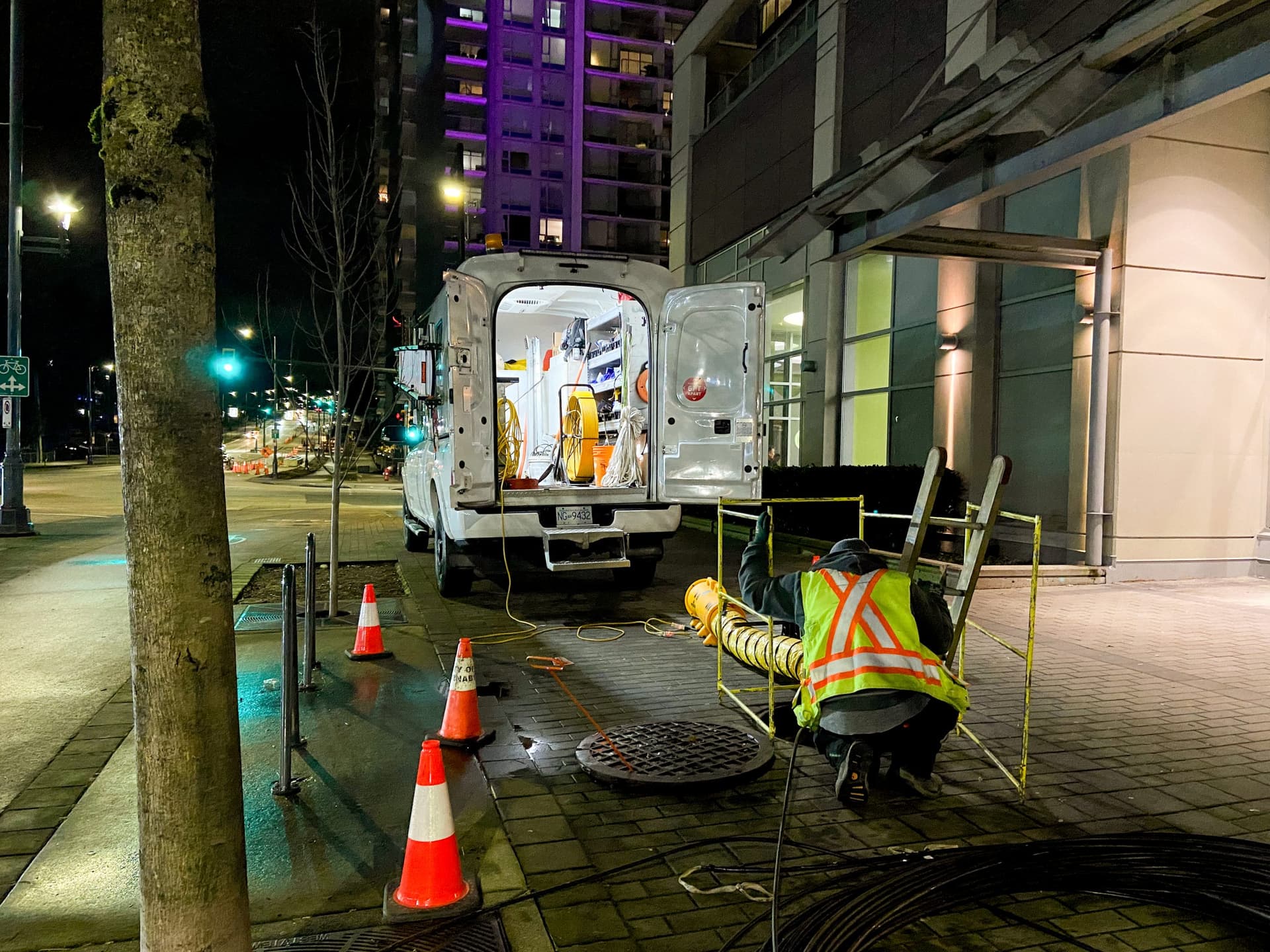
Fusion splicing for buried, aerial and inside-plant terminations. Closures, patch panels, and bidirectional OTDR and insertion-loss reports packaged for closeout.
- Mass-fusion and single-fiber splicing in mobile splice trailers
- Bidirectional OTDR and IL/RL reports per cable pair, archived to standard
- Splice closure assembly and patch panel terminations to spec
- Emergency splice response in active coverage states
Splice-only scopes have their own page: fiber splicing.
Aerial lashed and self-supporting builds with make-ready
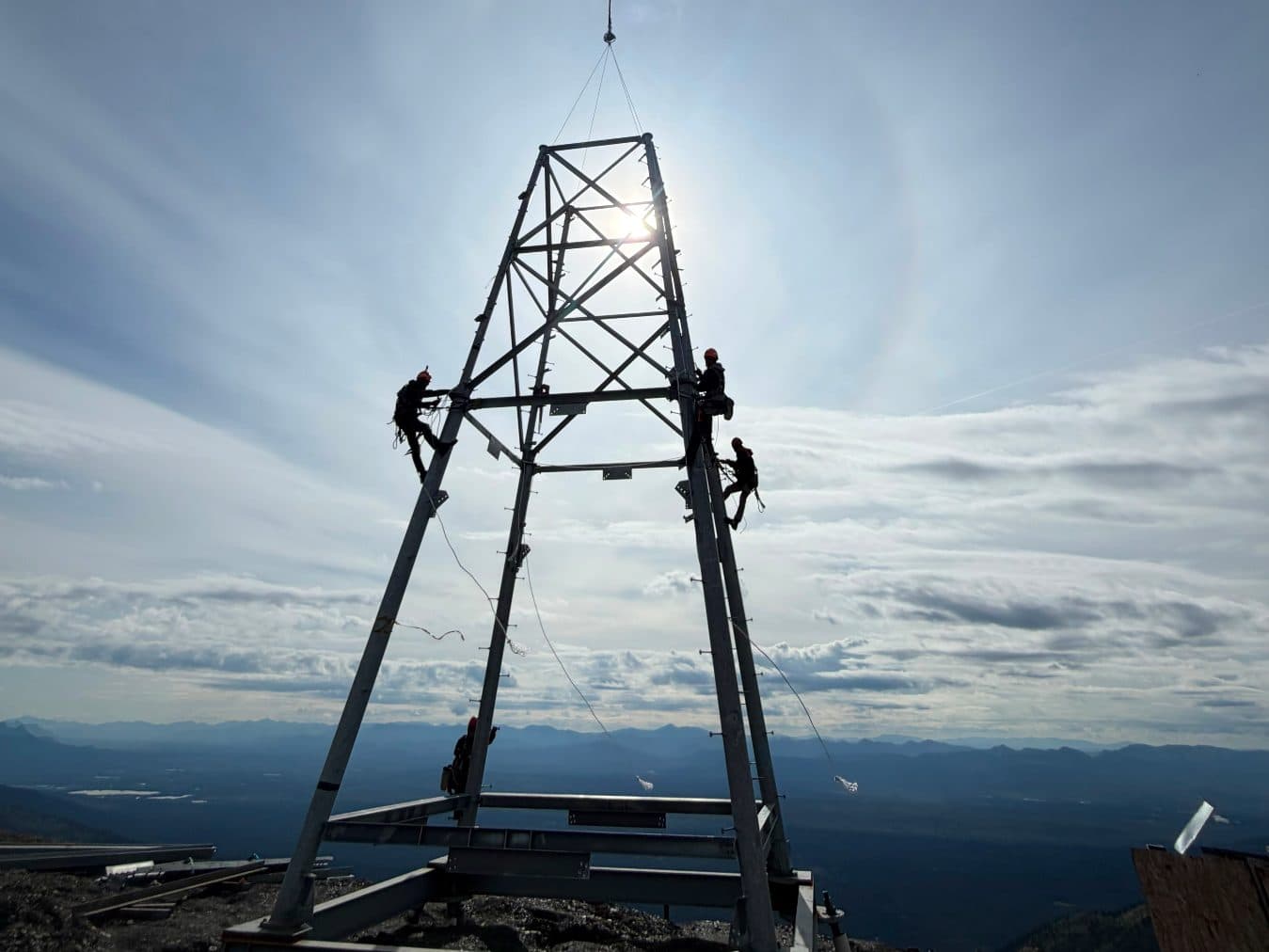
Aerial fiber on joint-use poles and dedicated structures. Make-ready coordination, pole attachments, lasher rigs and storm-grade hardware for service-area conditions.
- Joint-use pole make-ready and permitting support with utility owners
- Lasher rig and bucket-truck crews for lashed installations
- Self-supporting aerial cable for routes without lashing infrastructure
- Storm-grade hardware and sag tables tied to local wind-load standards
Strand, ADSS and pole-line work in more depth: aerial construction.
03 / Proof
Fiber programs in BEAD-qualified regions.
Program experience includes long-haul OSP builds, last-mile and middle-mile work, splice repair, and backhaul fiber for active wireless deployments.
- Where
- Fiber crews in multiple states, including Texas, New Mexico, Arizona, California, Colorado, Iowa, Nebraska and Minnesota
- BEAD-funded builds
- South, Southwest and Midwest service areas, where state coverage permits
- Emergency splicing
- Nearest available crew, timing confirmed on the first call
- Program detail
- Program metrics, route mileage and splice counts are released on request
04 / Questions
Common questions on fiber work.
- What is your minimum project size for fiber work?
- We scope individual splice work, repair, and short bore runs alongside multi-mile OSP programs. The decision is less about minimum length and more about routing complexity, permit posture, and timing against existing carrier work in the region.
- Who provides the route design: HexTel or the owner's engineer?
- Either path is supported. We work from owner-supplied design packages with as-built feedback during construction, or coordinate with a design partner if you need a single accountable team. Design ownership is settled in scoping.
- What does restoration include?
- Restoration is scoped per permit and right-of-way agreement: asphalt patch, concrete restoration, sod and seed, and disturbed-area landscaping where required. Photo evidence of pre-condition and final state is captured for every bore and trench.
- What is your response time on emergency splice repair?
- We dispatch the nearest available splice crew to emergency cuts, with timing confirmed on the first call. Out-of-state emergencies are routed through partner crews under our QA standards.
- What BEAD-qualified regions are you active in?
- We participate in BEAD-funded builds across the South, Southwest, and Midwest service areas where state coverage permits. Specific regional scope and federal funding alignment is part of the scoping conversation under NDA where relevant.
Next step
Ready to scope a fiber build?
Send the route, the permits and the timing, or your design package. We reply within one business day, ready with the right questions.