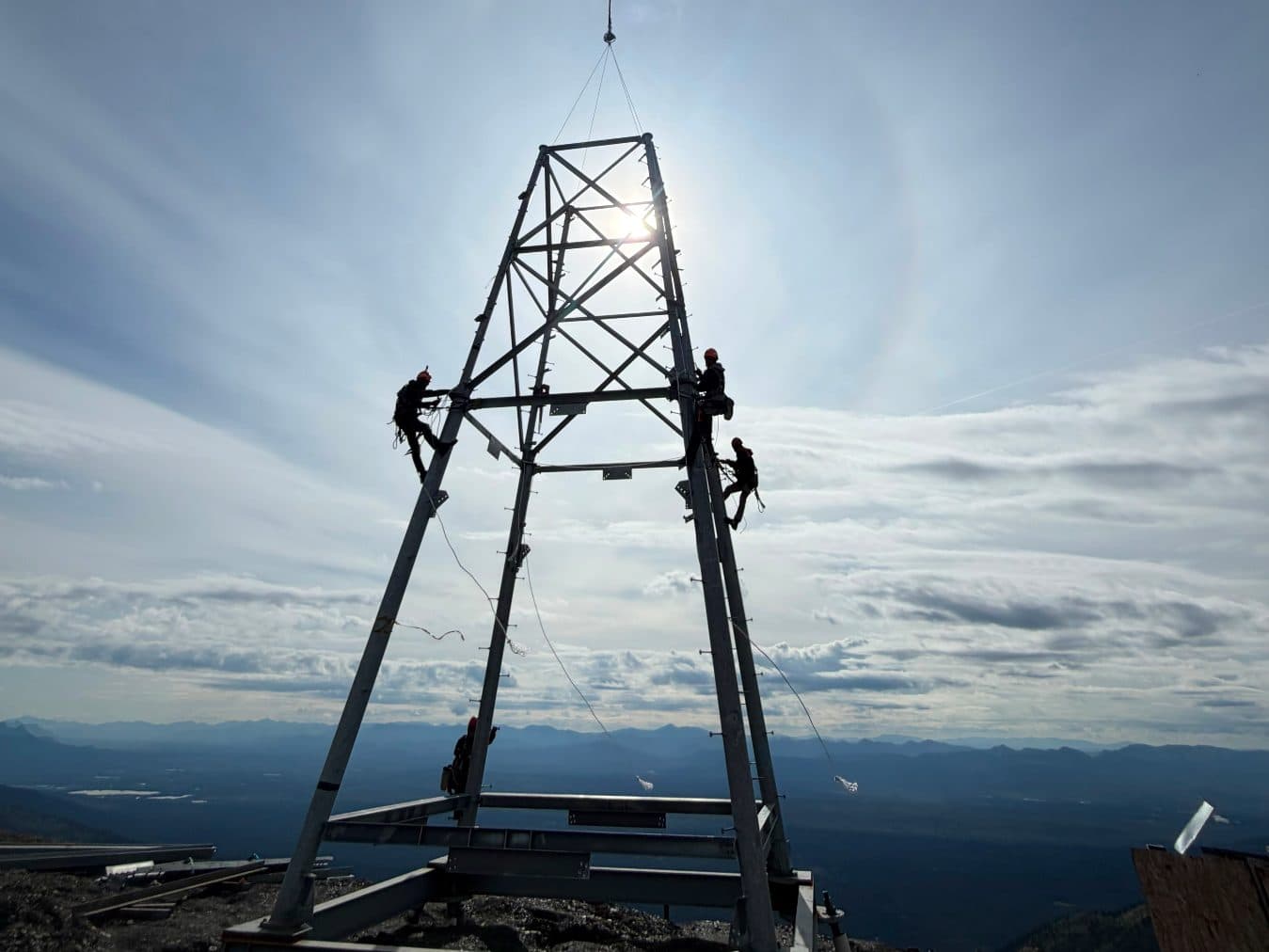
Aerial construction. Strand, ADSS and pole line.
Strand and lash, ADSS, make-ready, pole-line construction and storm restoration. Self-performing aerial crews, under the same closeout discipline as the rest of our fiber operation.
01 / Overview
Built to the pole owner's standard.
Strand, lash, ADSS and make-ready under one accountable crew model, from pole prep through closeout documentation.
On the pole line
Aerial construction comes down to coordination: pole owners, joint-use agreements, make-ready windows and the loading numbers behind each span.
HexTel runs aerial as part of a self-performing fiber operation, so the crew that places strand answers to the same program manager and QA standard as the crews that bore, jet and splice the route.
Sag and tension records, pole-by-pole make-ready documentation and GPS-captured as-builts are produced during construction. The evidence the pole owner and the carrier want at acceptance exists before the crew leaves the corridor.
Aerial is one leg of the full fiber stack. See the complete fiber services page for boring, jetting and splicing, or go straight to the aerial capability on the fiber page.
02 / What we do
Five scopes. Documented per span.
Strand, ADSS, make-ready, pole line and storm response, by HexTel aerial crews.
Strand and lashed fiber on joint-use and dedicated pole lines
New strand placement, overlash on existing plant, and lashed fiber builds run by bucket-truck and lasher-rig crews. Tensioning and sag set to the pole owner's standards.
- New strand, downguys and anchors placed to pole-owner specifications
- Overlash on existing strand where loading calculations allow
- Lasher rig and bucket-truck crews for lashed cable installation
- Sag and tension records captured per span for closeout
ADSS for spans without lashing infrastructure
All-dielectric self-supporting cable for routes where strand is impractical: crossings, long spans and power-adjacent corridors. Hardware selected against span length and local wind-load conditions.
- ADSS dead-ends, tangents and downleads fitted to span design
- Span-length and sag engineering coordination with the route owner
- Power-space and communications-space placement per joint-use rules
- Post-installation inspection records tied to each span
Make-ready and pole prep ahead of new attachments
Make-ready work that clears the path for new aerial attachments: rearranging existing plant, replacing hardware, and coordinating with pole owners so the build phase is not waiting on prep.
- Existing-attachment rearrangement to create attachment space
- Pole-top hardware replacement and grounding corrections
- Coordination with pole owners and other attachers on schedule windows
- Field documentation of before and after conditions per pole
Pole sets, replacements and line rebuilds
New pole-line construction and replacements where the route needs new structures: pole sets, transfers and retirements sequenced so existing services stay up during the rebuild.
- Pole sets and stub replacements to owner and NESC clearance standards
- Attachment transfers sequenced to keep existing services live
- Old-plant retirement and removal with disposal documentation
- GPS-captured pole locations for as-built records
Storm restoration for damaged aerial plant
Emergency mobilization for storm-damaged spans: temporary restoration to bring services back, then a permanent rebuild with documentation the owner can take to insurance and audit.
- Emergency mobilization within active coverage states
- Temporary restoration first, permanent rebuild scheduled behind it
- Damage documentation per span for owner and insurance records
- Coordination with utility restoration crews on shared corridors
03 / Proof
Aerial programs inside active fiber builds.
Joint-use corridors, dedicated pole lines and storm-response work, alongside boring, jetting and splicing scopes.
- Where
- Aerial crews in multiple states, including Texas, New Mexico, Arizona, California, Colorado, Iowa, Nebraska and Minnesota
- Construction
- Joint-use, dedicated pole line and crossing construction
- Storm response
- Emergency storm response in active coverage states
- Program detail
- Program metrics, span counts and make-ready volumes are released on request
04 / Questions
Common questions on aerial construction.
- Who handles make-ready and joint-use permitting, HexTel or the attacher?
- Either model works. We can work under your existing joint-use agreements and permits, or coordinate the make-ready application process with pole owners as part of the scope. Ownership of the permit relationship is settled in scoping so nothing stalls mid-build.
- When do you recommend lashed cable versus ADSS?
- Lashed construction fits routes with existing strand or where multiple cables will share the run. ADSS fits crossings, long spans, and corridors where placing strand is impractical. The call is driven by span lengths, loading, pole condition, and what the route owner's standards allow.
- How fast can crews mobilize for storm damage?
- We dispatch the nearest available aerial crew for storm restoration, with timing confirmed on the first call. Out-of-state emergencies are routed through partner crews under our QA standards.
- Can you overlash on existing strand instead of building new?
- Yes, where the existing strand and pole loading support it. We verify strand condition and loading against the owner's standards before committing to overlash, and fall back to new strand or ADSS where the numbers do not work.
- How does aerial work combine with your other fiber services?
- Aerial construction is one leg of the same self-performing fiber operation: boring and jetting for underground segments, splicing and testing for turn-up. One program manager runs the route end to end. See the full fiber services page for the complete OSP stack.
Next step
Ready to scope an aerial build?
Send the route, the pole owners and where make-ready stands, or your design package. We reply within one business day.